

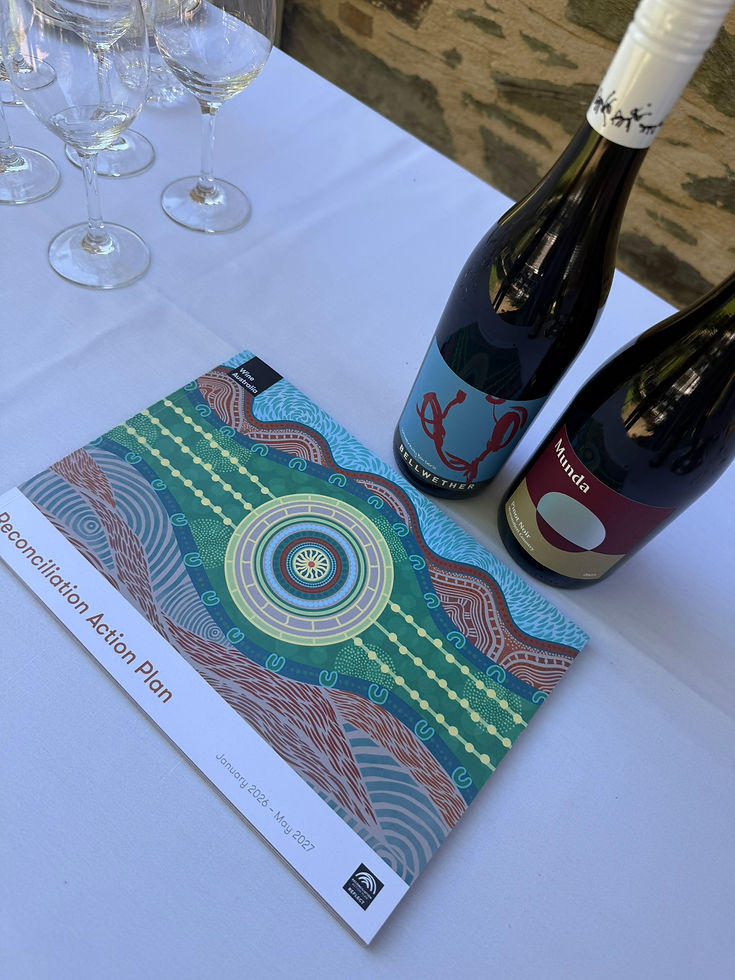
Wine Australia RAP Launch


Last week, Munda Wines was delighted to attend the launch of Wine Australia’s Reflect Reconciliation Action Plan, which has been endorsed by Reconciliation Australia.
This RAP is particularly close to our hearts. As was acknowledged during the launch, our own Pauly Vandenbergh played an important role in its early development. One of Pauly’s cultural awareness sessions with Wine Australia leadership sparked the initial exploration of a Reconciliation Action Plan, leading to the establishment of a RAP Committee and, ultimately, the delivery of this significant piece of work.

As Wine Australia noted at the launch, “The Reflect RAP is our first step in formally embedding reconciliation into our strategy, culture and everyday operations. It is a foundational step in building cultural capability, meaningful relationships, and a vision for future action, and it reflects our commitment to better understand Aboriginal and Torres Strait Islander cultures, perspectives and contributions.”
Here at Munda Wines, we believe strongly in the power of shared understanding through education. This felt like the right moment to dive into some of the language we often hear in this space - reconciliation, RAPs, Reflect, Innovate, Elevate - but don’t always have time to explore. What does reconciliation actually mean in practice? What is a Reconciliation Action Plan? And do these frameworks genuinely make a difference?

So, what is reconciliation in Australia?
Reconciliation in Australia is both a movement and a practical process. At its core, it is about improving relationships between Aboriginal and Torres Strait Islander peoples and other Australians, acknowledging past harms and ongoing systemic inequality, and working towards a more just and equitable future.
It's a broad scope. Reconciliation involves recognising First Peoples’ enduring connection to Country, understanding histories that predate colonisation by tens of thousands of years, addressing discrimination and disadvantage, and building trust, respect and understanding across society. Importantly, it's not a single moment, statement or event. Reconciliation is an ongoing commitment, shaped through actions, decisions and cultural change over time.
At a national level, this work is guided by Reconciliation Australia, an independent, non-government peak body established in 2001 to promote reconciliation through research, advocacy, leadership and partnerships across business, government and the community sector.
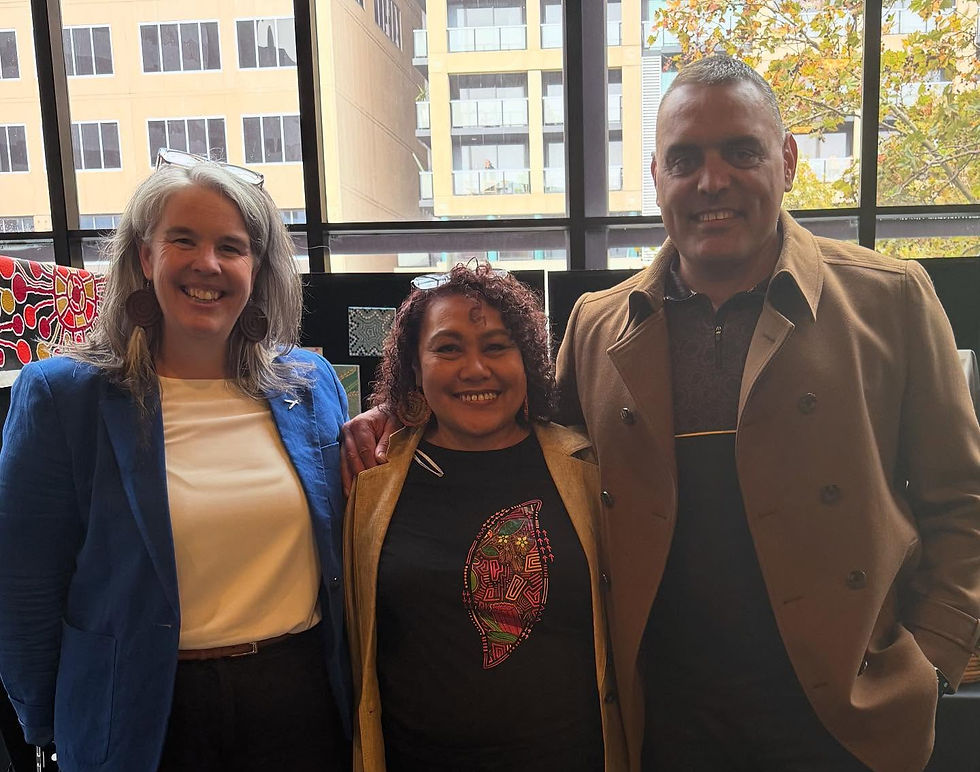
Reconciliation Action Plans: what they are and why they matter
One of the most visible ways organisations engage with reconciliation is through a Reconciliation Action Plan, or RAP. A RAP is a formal, structured document that sets out the practical actions an organisation commits to taking within its own sphere of influence.
RAPs are not designed to be symbolic. They focus on measurable, real-world commitments across three core themes: – building relationships with Aboriginal and Torres Strait Islander peoples – fostering respect for cultures, histories and knowledge – creating opportunities that support self-determination and help address inequality.
The RAP framework recognises that organisations start from different places, and it provides four stages that support learning, growth and accountability over time:
A Reflect RAP is the foundational stage. It helps organisations explore where they are starting from, build internal understanding, engage staff and leadership, and begin forming respectful relationships with local Aboriginal and Torres Strait Islander stakeholders. This stage typically runs for 12 to 18 months.
An Innovate RAP moves into planning and early implementation. Organisations commit to defined actions and begin piloting initiatives that build on the foundations laid during the Reflect stage, usually over a two-year period.
A Stretch RAP marks a shift into deeper integration. At this level, reconciliation is embedded into core business operations, with measurable targets and longer-term strategies that make reconciliation part of everyday practice rather than a separate initiative.
An Elevate RAP is the most advanced stage. It is designed for organisations with demonstrated maturity in reconciliation practice that are ready to lead, influence others and contribute to broader, systemic change.
Each stage builds on the one before it, but the framework remains flexible, allowing organisations to move at a pace that reflects their capacity, context and responsibility.
How RAPs are developed
Developing a RAP is a collaborative and reflective process. It begins with honest internal conversations about current practices, gaps and opportunities. These discussions are not always easy, but they are essential. Often, it is precisely these more challenging conversations that lead to the most meaningful growth.
From there, organisations engage with staff and with Aboriginal and Torres Strait Islander partners, communities and stakeholders to shape actions that are informed, respectful and achievable. Once drafted, RAPs are submitted to Reconciliation Australia for feedback and endorsement. Throughout this process, organisations are supported with tools, templates and guidance to ensure their plans are practical and aligned with national reconciliation goals.
Endorsed RAPs are published publicly, creating transparency and a shared body of learning that organisations across the country can draw from. You can search Reconcilation Australia's database of endorsed RAPs here.
Do Reconciliation Action Plans actually make a difference?
In short, yes - because they move reconciliation from intention into action.
Without a framework like a RAP, reconciliation risks remaining abstract: acknowledged in speeches or annual events, but disconnected from how organisations actually operate. A RAP changes this by requiring organisations to clearly state what they will do, when they will do it, and who is responsible. That commitment creates accountability and momentum.
RAPs also embed reconciliation into systems rather than leaving it to individual goodwill. This means reconciliation is no longer dependent on a single champion; it becomes part of induction processes, supplier decisions, leadership development and community engagement. Over time, this structural approach is what creates lasting change.
There are tangible outcomes too. Commitments to Indigenous employment, supplier diversity and cultural capability open doors that have historically been closed. Aboriginal and Torres Strait Islander businesses gain access to supply chains. Staff build deeper understanding of Country, history and culture. Workplaces become more inclusive and culturally safe.
At a national level, the cumulative impact is significant. Thousands of organisations - from small community groups to major corporations and government agencies - are working within the same framework. Individually, each RAP may seem modest. Collectively, they shape workplace culture, influence procurement decisions worth billions of dollars, and normalise respectful engagement with First Nations peoples across Australian society. Importantly, since 2014 Reconciliation Australia has published an annual Impact Report that details the, well, impact created by the nation's RAPs. It makes for fascinating and inspiring reading.
RAPs do not claim to solve everything. Instead, they ask organisations to take responsibility for the part they can play - consistently, transparently and over time. In a space where progress depends on sustained effort rather than grand gestures, that consistency is exactly what makes the difference.


Comments