

Past Heroes: The 1868 Tour of England
The Aussies have retained the Ashes in almost-record time - just eleven days - with the Boxing Day Test at the MCG done and dusted in only two (as an aside, congrats to England on their first Test victory in Australia in over 18 years). If the breathtaking pace we’ve witnessed over the past few weeks has left you feeling a little short-changed in the cricket department, we invite you to dive into another cricketing story – one that predates the Ashes, the Baggy Green, and even the very concept of Test cricket.
(But, before we begin, a note for the notoriously fact-crazed cricket tragics amongst us…. We’re aware that virtually every date and signpost in cricketing history is disputed to some degree. We’ve collated this story from articles, historical records and – yes – Wikipedia, and have included reference below. Enjoy).
The date is 1868. Federation, which created the nation of Australia, was still more than 30 years away and instead the continent was divided into six British colonies, each governed separately under British law. The First Nations peoples of Australia – the oldest continuing cultures on the face of the Earth – weren’t counted as citizens by any of the colonies and certainly had no voting rights or equality in the eyes of the law. In Victoria, where our story begins, the Central Board for the Protection of Aborigines [sic] controlled the lives, work and marriages of Aboriginal people within a broader campaign of dispossession and genocide that commenced in the late 18th century under British colonial oppression.
It is within this context that our story begins. The first Australian cricket team to ever tour England – playing 47 matches across five months – was a group of thirteen Aboriginal men from the Western Districts of Victoria. Their journey was extraordinary, taking an enormous personal toll on the team members, and generally unrecognised until recent years.
The players themselves were drawn largely from the large pastoral stations around Harrow and Edenhope in Western Victoria, where cricket had become established as a shared sporting code between Aboriginal pastoral workers and the European colonialists. A former Surrey professional named Charles Lawrence organised and promoted the tour, acting as team captain throughout the fixtures. With a final record of 14 wins, 14 losses and the balance of matches drawn, the tour stands as a testament to the exemplary skill, talent and resilience of the players.

Contemporary match reports name the players as follows:
Johnny Mullagh – traditional name: Unaarrimin
Bullocky – traditional name: Bullchanach.
Sundown – traditional name: Ballrin
Dick-a-Dick – traditional name: Jungunjinanuke
Johnny Cuzens – traditional name: Zellanach
King Cole – traditional name: Bripumyarrimin
Red Cap – traditional name: Brimbunyah
Twopenny – traditional name: Murrumgunarriman
Charley Dumas – traditional name: Pripumuarraman
Jimmy Mosquito – traditional name: Grougarrong
Tiger – traditional name: Boninbarngeet
Peter – traditional name: Arrahmunijarrimun
Jim Crow – traditional name: Jallachniurrimin
Of course, the derogatory and diminutive nicknames were imposed by the colonialists and were almost exclusively used during the tour. It's only in later years that the cricketers' correct names have been restored.
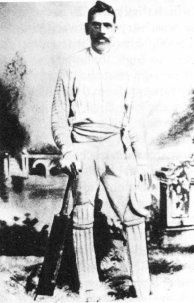
Within the team, one player, Unaarrimin (Johnny Mullagh), emerged as a standout athlete. A gifted all-rounder, he scored more than 1,600 runs and took over 240 wickets on tour, earning admiration from English crowds and later induction into the Australian Cricket Hall of Fame. Contemporary reports frequently singled him out as one of the finest cricketers of the season, and English bowler George Tarrant – widely considered England’ top bowler at the time – was quoted as saying of Unaarrimin “I have never bowled to a better batsman.”
Despite the obvious competitiveness of the team, the broader tour unfolded against a backdrop of deep racial prejudice. English newspapers often portrayed the team as curiosities rather than elite sportsmen, reflecting the prevailing attitudes of the time. The players were also forced to perform novelty displays to attract crowds, such as throwing boomerangs and spears, or posing in ‘war paint.’
Both during and after the tour, there was a profound human cost to the touring side. One player, known as King Cole, died of tuberculosis while in England and none of the players received the monetary compensation they had been promised by the tour organisers. Of course, opportunities to continue playing competitive cricket upon their return to Australia were few and far between.
And yet, and yet.
Long before Australian cricket established its international reputation, before the ball (or stumps, or ladies’ veil….) was burned for their Ashes, before the ‘cap’ became the revered Baggy Green, this original team played on – with skill, discipline, dignity and quiet determination.
Since 2020, the Player of the Match in the Boxing Day Test has been awarded the Mullagh Medal, recognising the trailblazing contribution of Unaarrimin (Johnny Mullagh) and in 2021 Gulidjan man and Victorian hero Scott Boland famously took six for seven on debut at the MCG and was awarded the Mullagh Medal – but he’s still waiting for his statue….

As modern Ashes contests come and go, remembering and celebrating this touring side of singular athletes invites us to pause. We consider whose stories through history are deemed heroic, or worthy of acclaim, and are reminded that a fuller knowledge of all aspects of our history deepens our understanding, respect and appreciation of the generations who have come before us.
Further reading & sources
Australian Aboriginal cricket team in England in 1868, Wikipedia
https://en.wikipedia.org/wiki/Australian_Aboriginal_cricket_team_in_England_in_1868
BBC News Magazine — The forgotten Aboriginal cricket tour of 1868
Informit — The Aboriginal cricket team of 1868
https://search.informit.org/doi/10.3316/informit.069456474886032
Archived Victorian cricket history resource


Comments